Kaspersky develops projects to improve society's digital literacy through accessible training and practical projects for various audiences.
How we educate users about cybersecurity basics
We believe that for technology to be beneficial, people need to understand how it works, what risks exist online, and how to protect themselves and their loved ones. That's why we develop educational initiatives that explain cybersecurity basics in simple, understandable language and foster a responsible attitude toward digital technology.
One of the key areas of our work is teaching digital security rules. We explain how to recognize telephone and online scams, protect personal data, and safely use connected devices and digital services. This knowledge helps people make informed decisions in digital environments and reduce risks in everyday life.
We speak about cybersecurity simply and clearly
Kaspersky has created several educational projects for people at every level of involvement in cybersecurity—from information security experts to ordinary internet users. The Change Your Password! and OBIBE podcasts discuss digital risks, cyber hygiene, and modern threats. They cover both universal topics that are relevant to every user and specialized issues of interest to professionals.
We offer the Kids' Cyber Resilience project for children and teenagers
In 2023, Kaspersky, together with international partners, launched the Cyber Resilience for Children program in the Asia‑Pacific region. Over the years, it has expanded significantly and now covers Vietnam, Indonesia, Philippines, Malaysia, India, Egypt and the CIS countries.
The Kids' Cyber Resilience project hosts educational events for children, parents, and teachers, where everyone learns how to behave safely in digital environments. In 2024, we created a series of online training courses on the safe use of artificial intelligence in education. This training is designed specifically for educators and parents to help young people navigate new technologies.
In 2026–2027, we plan to launch the Kids' Cyber Resilience program in Russia and the CIS countries, as well as in several countries in the Middle East and Africa.
We build cyber resilience in society
Kaspersky is developing several projects aimed at fostering a responsible attitude towards technology through education and culture.
IT Journalism is Russia's first educational course dedicated to information security for future journalists. Journalists play a key role in shaping public understanding of digital risks, cyber threats, the potential of new technologies, and principles that inform how to safely use them. To make future media professionals more competent in IT and cybersecurity, we launched the IT Journalism course at the HSE Institute of Media in 2025. Here, students study cybersecurity, the IT industry, and become familiar with specific aspects of working with technology topics in the media.
Case 404 online game
Teaching Gen‑Z about cybersecurity through games
Problem
Many users, especially young people, underestimate digital threats, and traditional formats for cybersecurity training often prove to be difficult and uninteresting.
What we did
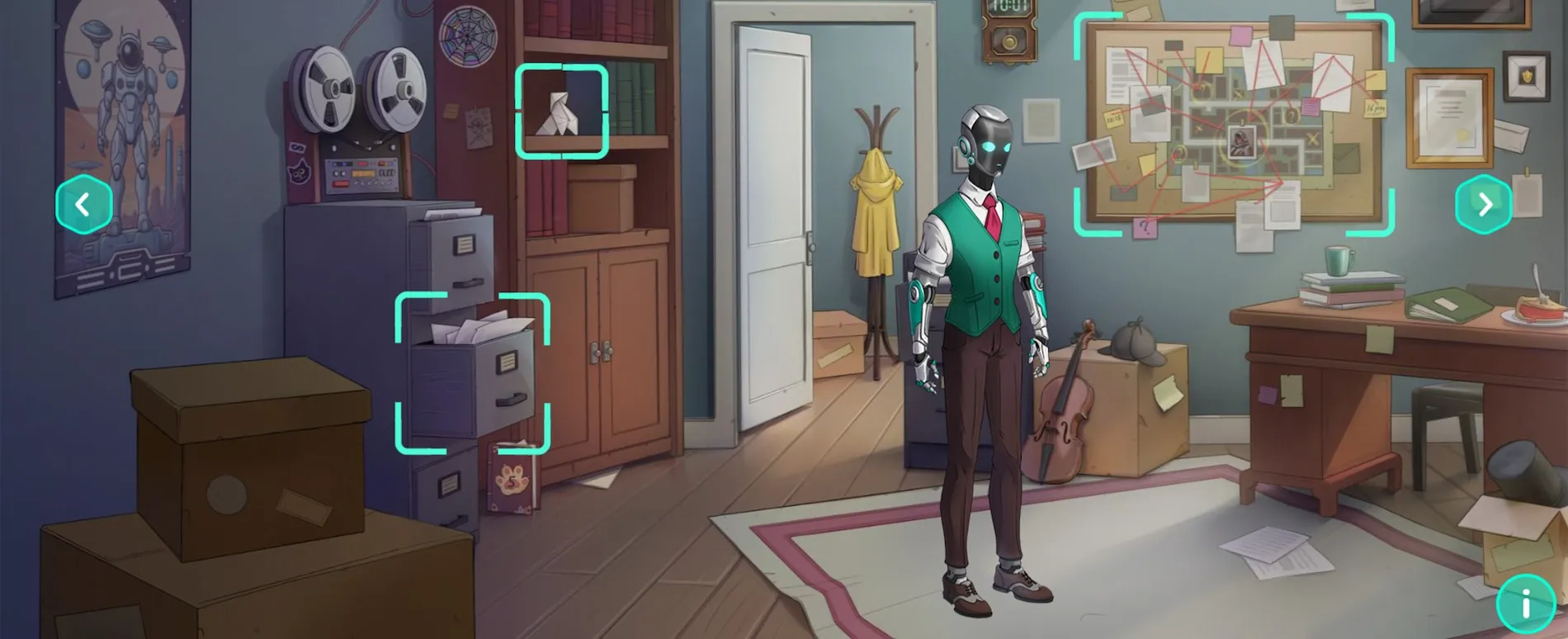
Kaspersky created Case 404, an interactive online game available in nine languages, that particularly targets Gen‑Z users. In this game, players become cyber detectives who must solve exciting cyber crime cases. Users solve problems based on real‑world cyberthreat scenarios: hacks, data leaks, online stalking, and social engineering.
To promote the project, the Company collaborated with NASR Esports and Reckoning Esports teams as well as Twitch Japan.
What was the result?
>30,000 players
Better digital literacy in practice
Accessible and easy‑to‑understand learning format
More responsible behavior on the Internet
We develop educational programs for university students and schoolchildren
Comprehensive courses on the Kaspersky Academy platform
In 2025, we created a new learning platform for universities, providing access to our Introduction to Cybersecurity. Entry Level and Fundamentals of Cybersecurity courses, which we update in Russian and English. We also launched the Cyber Hygiene course, a universal basic course for anyone who wants to protect themselves online, and an online course on IT and information security for schoolchildren and university students.
Kaspersky Academy Alliance for Russian colleges
We know that secondary vocational education is an important stage in developing the skills of future specialists. That's why Kaspersky launched a program to collaborate with colleges to help their students get a cutting‑edge cybersecurity education.
Partnerships and internships for students
In Indonesia, we entered into an agreement with PeaceGeneration Indonesia to increase digital awareness among young people. We also offer internship programs: in India, students are gaining practical experience in information security, and in Russia, the Technology Valley summer project held in 2024 gave schoolchildren and university students the opportunity to work on real Kaspersky projects.
We work with schools and teachers
Educational work in schools
Since 2018, Kaspersky has actively participated in educational work related to information security for students at Russian schools, their parents, and teachers.
For example, Kaspersky experts developed the Fundamentals of Information Security course for students in grades 7–11. Teachers can use the material in computer science lessons or as part of extracurricular activities. It is also available to parents of students. The curriculum is based on materials accumulated over years of work with computer science and mathematics teachers, as well as with Moscow schools in collaboration with the Moscow Department of Education and Science.
The course is regularly updated, thanks in part to the Company's collaboration with ten sponsored schools and a college, where offline classes are held regularly. Top managers from Kaspersky, including Eugene Kaspersky himself, give lectures to schoolchildren and teachers at the State Budgetary Educational Institution “Vorobyovy Gory”.
Kaspersky experts teach classes at
10
sponsored schools
In addition, twice per academic year, the Company conducts online professional development courses for mathematics and computer science teachers in various regions of Russia.
All of Kaspersky's educational activities are carried out with the support and under the auspices of the Federal Institute for Digital Transformation in Education (FICTO) of the Russian Ministry of Education.
Digital Lesson
Digital Lesson, a nationwide Russian educational project
The project is being implemented by the Russian Ministry of Education, the Russian Ministry of Digital Development, and Autonomous Non‑Profit Organization Digital Economy in partnership with leading Russian technology companies
Personnel for the Digital Economy, a federal project
Since 2018, Kaspersky has been a partner of Digital Lesson, a nationwide Russian educational initiative that is part of the Personnel for the Digital Economy federal project. Each year, we develop and release one focused lesson with an interactive simulator for students, parents, and teachers. These lessons are taught in Russian schools over the course of three weeks.
>22million
Kaspersky's "Digital Lessons" have been completed more than 22million times since 2018.
When creating new lessons, we try not to overload students with difficult information. Instead, we focus on what is essential. For us, it is important to present the material in an easy and accessible way, and to engage children with high‑quality animations and interactivity.