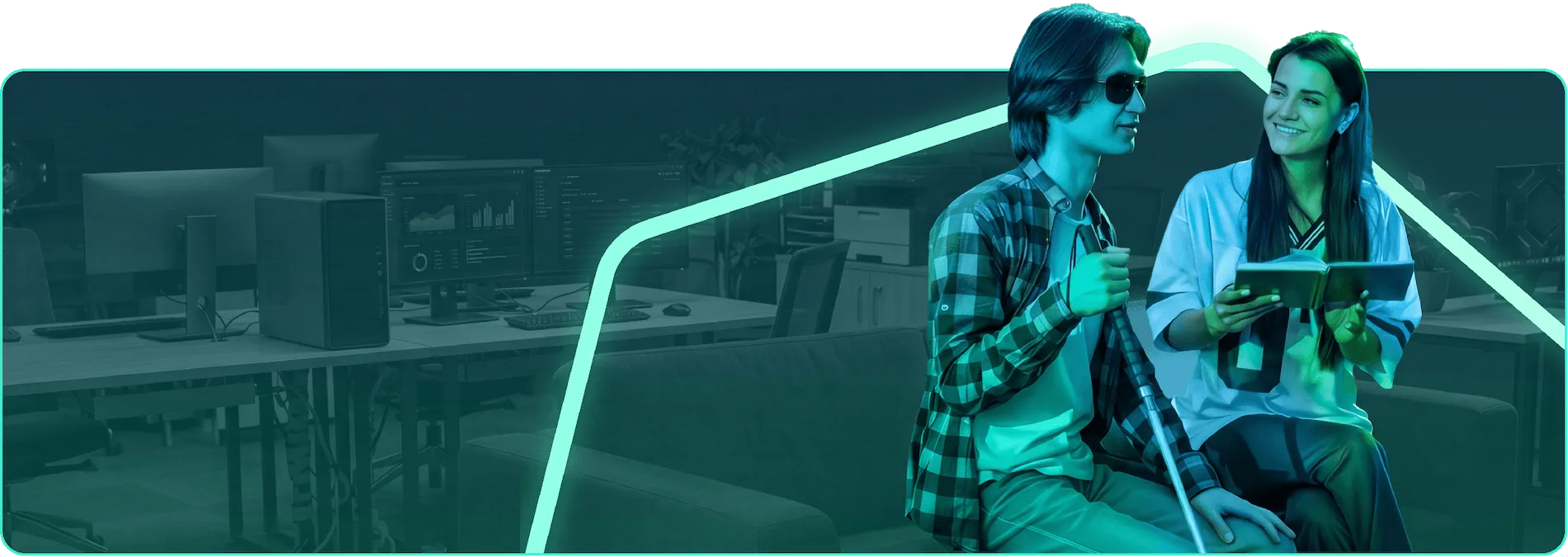
We strive to create an environment where people with disabilities can safely use digital services, develop skills, and build careers in IT.
For Kaspersky, inclusivity in cyberspace means, above all, equal access to knowledge, technology, and opportunities for professional development.
One of the key areas of our work is inclusive employment. Since 2022, Kaspersky has been a member of the Business Council on Disability Issues, organized by the Perspectiva Regional Public Organization of Disabled Persons. The Company participates in joint projects aimed at expanding opportunities for students and young professionals with disabilities.
Our employees regularly participate in job fairs and career guidance events, including the Career Path competition and job fairs for students and young professionals with disabilities. They also conduct tours, career guidance lectures, and meetings at our Moscow office. In 2025, we helped organize a business breakfast attended by over 30 representatives of companies that support inclusive employment.
We create inclusive internships
During the reporting period, we continued to expand inclusive employment. Kaspersky invited university students and recent graduates with disabilities to participate in internship programs in various departments of the Company.
In 2025, we conducted a study on ESG practices at Russian companies, which showed that most Russians (63%) felt positively about hiring an intern with a disability. About one third of respondents were neutral.
What was the result?
By the end of the reporting period, we had filled all vacancies for interns with disabilities at the Company. In 2026, we plan to expand our inclusive hiring program and open new positions.
We also emphasize physical and digital accessibility in workspaces. In the fall of 2024, Perspectiva audited the Company's Moscow office to assess the accessibility of the broad environment and access to workstations for people with disabilities or limited mobility. The audit produced a detailed report with recommendations that we are using to further improve our office spaces.
An important part of our work remains the creation of a culture with more acceptance and less stigma. Since 2022, our Sustainabity team has published special websites for International Day of Persons with Disabilities, sharing the professional and personal experiences of employees with disabilities and of parents of children with disabilities.
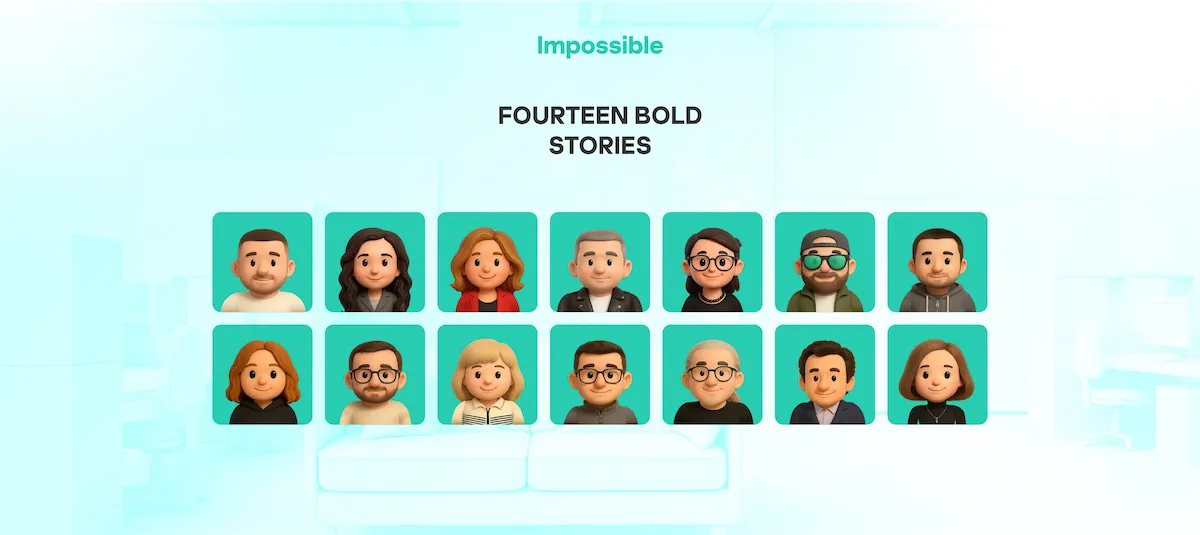
In 2023, we launched the Impossiblewebsite to share their stories. It is updated annually with the addition of new stories. In 2025, we significantly expanded the project: website visitors can now tour the Company's virtual office, meet 3D characters, get information about various disabilities and illnesses, and donate to Perspective's inclusive employment programs.
We also address digital literacy for people with mental disabilities. In fall 2024, together with the Syndrome of Love Foundation, the Company unveiled Russia's first digital literacy manual for people with Down syndrome. In 2025, we expanded the project by partnering with the Kun Bala Foundation in Kazakhstan, donating computer equipment and educational materials. In the future, we plan to extend the project to other regions where Kaspersky has a presence.
In addition, in 2024, the Company once again joined the nationwide Dobroshrift campaign in Russia, dedicated to Cerebral Palsy Support Day, supporting the initiative to raise awareness about inclusion and accessible environments.
Accessibility of our products and services for people with disabilities
Over the past few years, the company has been systematically improving the accessibility of its corporate digital resources. Key corporate websites, including consumer‑facing (B2C) pages, the shopping cart, checkout pages, and support services, have been adapted in line with accessibility requirements. Accessibility principles have also been integrated into the development and update processes for digital products.
During the reporting period, the company’s work focused on building sustainable processes: automated accessibility tests were introduced, and accessibility requirements were embedded into development standards. This helps ensure that accessibility is considered at the stage of creating new features. Thanks to the component‑based architecture, many improvements implemented for the B2C segment can also be scaled to B2B websites.
In addition, the company conducts user research involving people with disabilities. In particular, testing sessions were organized with a blind user, who completed purchase and support request scenarios. The results of such research are used to identify barriers and prioritize further improvements.
At the same time, not all corporate digital resources currently fully meet accessibility requirements. In particular, some smaller subsites, which are developed and maintained with limited resources, have not yet undergone full accessibility adaptation. The company recognizes these limitations and is considering opportunities to address them gradually as resources become available, with the aim of ensuring a consistent level of accessibility across all digital platforms.
Work to improve accessibility is continuous: the company regularly enhances its interfaces, including improvements to navigation elements such as display mode switches, and further develops internal processes and methodological materials aimed at maintaining and further improving the accessibility of its digital services.